Stacked Slums
I’m excited to share my latest lighting study, based on the Leartes Studios "Stacked Slums" project. This piece is the direct result of a deep dive into Physically Based Lighting (PBL) following an incredible workshop hosted by CG Foundry, featuring guest speaker Karim Yasser. The Process & Technical Breakdown: The workshop was a masterclass in setting up a scene correctly from the ground up. Instead of jumping straight into placing lights, we focused on the science behind the pixels. Foundation First: I spent a significant amount of time calibrating Project Settings, Camera Setup, and HDR Eye Adaptation. The Numbers: We focused on accurate EV, Lux, and Nit values. Establishing this baseline before adding a single hero light changed my entire workflow. Sky & Atmosphere: I utilized custom skyboxes and focused heavily on Sky Illuminance to ground the environment. Lumen & Lighting Strategy: Once the foundation was set, I calibrated the hero light to complement the skybox. To keep the scene performant and avoid the "light soup" effect, I relied on Lumen emissive cards with unique materials to bounce light and dress the scene. Spotlights were used sparingly, only to pick out specific architectural details. Creative Pivot & Optimization: Initially, I envisioned a "Tungsten Hurricane" vibe. However, as I refined the LookDev, the scene naturally evolved into a spookier, atmospheric shanty town. I ran into some heavy GPU bottlenecks with my initial foreground and background elements. I made the call to remove them, and surprisingly, this improved the composition by forcing the focus entirely on the verticality of the structure. Tools & Post-Processing: William Faucher’s Easy Toolbag: Used for rapid fog placement (EasyFog) to build ambiance. DaVinci Resolve 20: Handled the initial color grading and VFX compositing. Photoshop Camera Raw: The final pass to pull out micro-details and homogenize the overall palette. A huge thank you to CG Foundry and Karim Yasser for the invaluable knowledge!

Final Image

DaVinci Resolve (Initial Comp)

Unreal Engine Render (RAW)
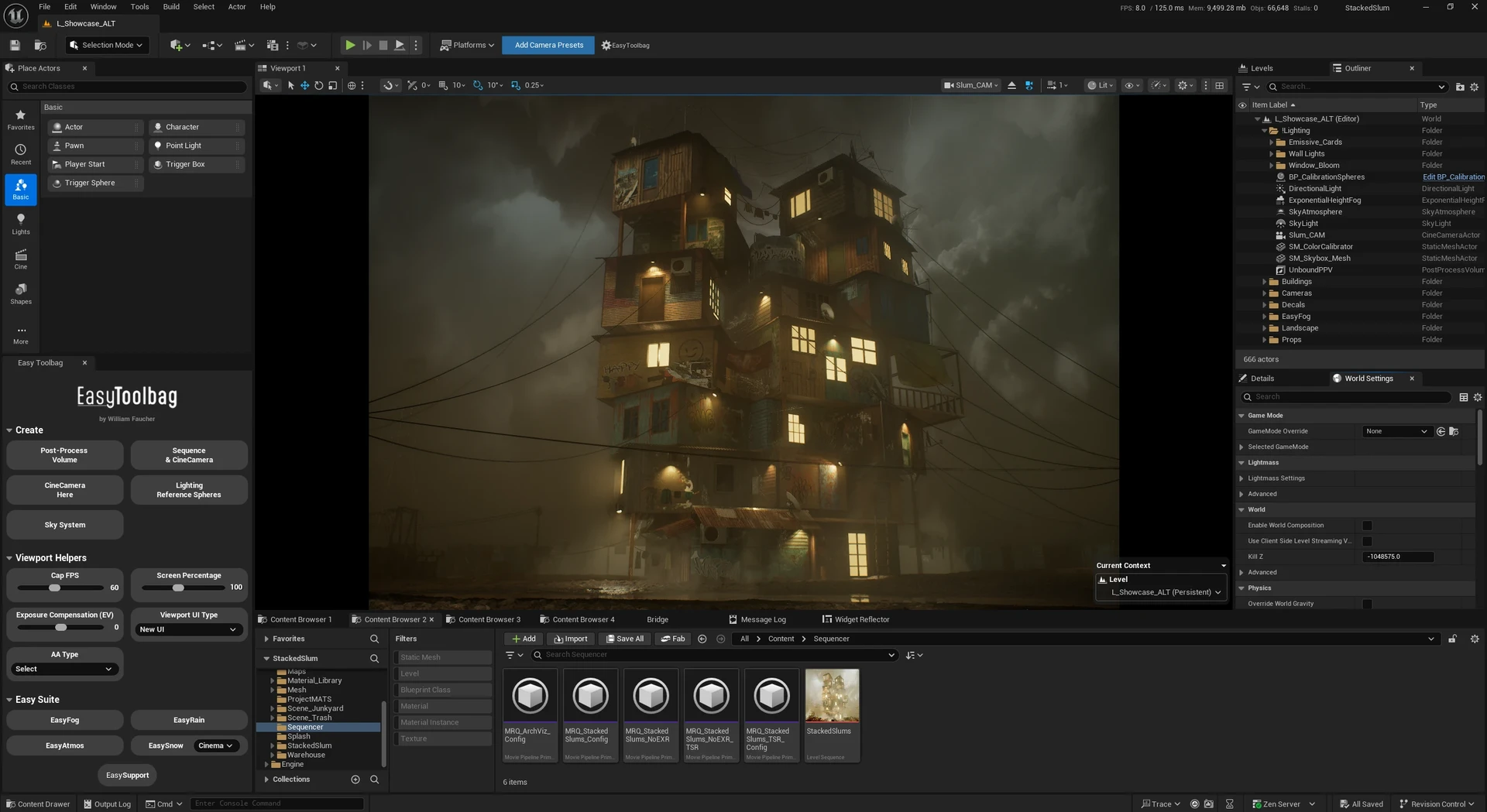
UE Editor View

UE Editor View (Detailed Lighting)

UE Editor View (Base Color)
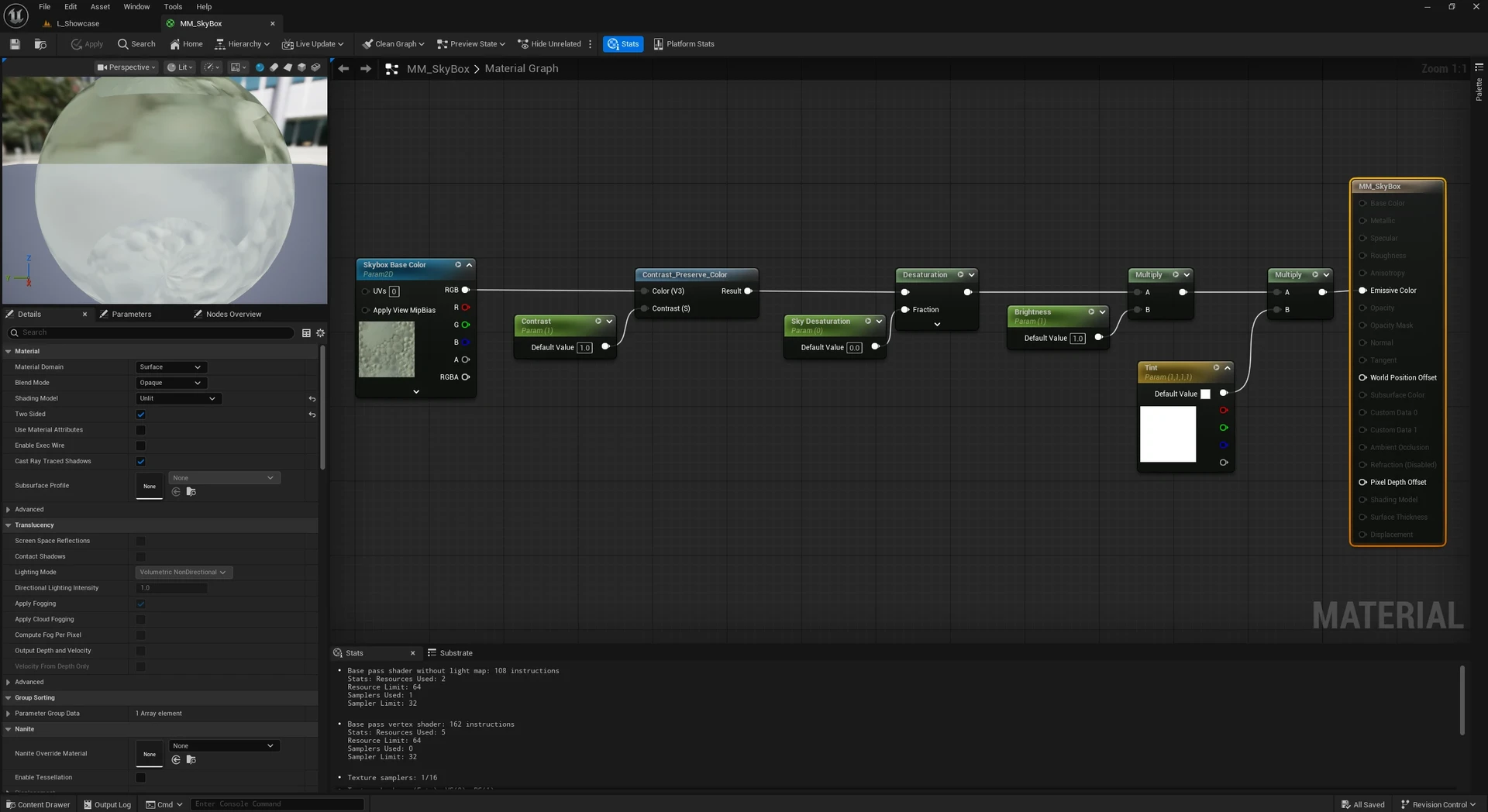
Skybox Material

Emissive Lumen Card Material

DaVinci Resolve 20 (Editor View)